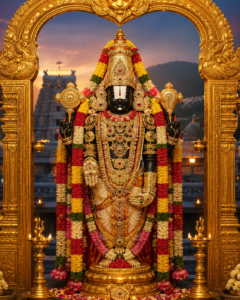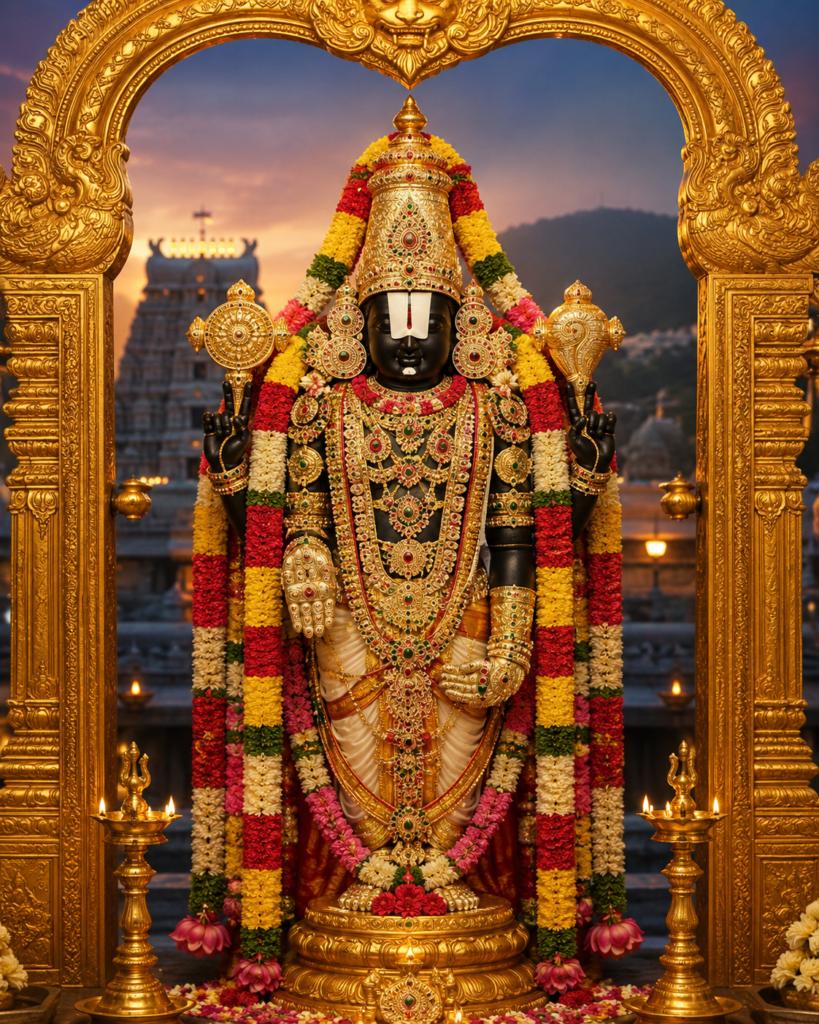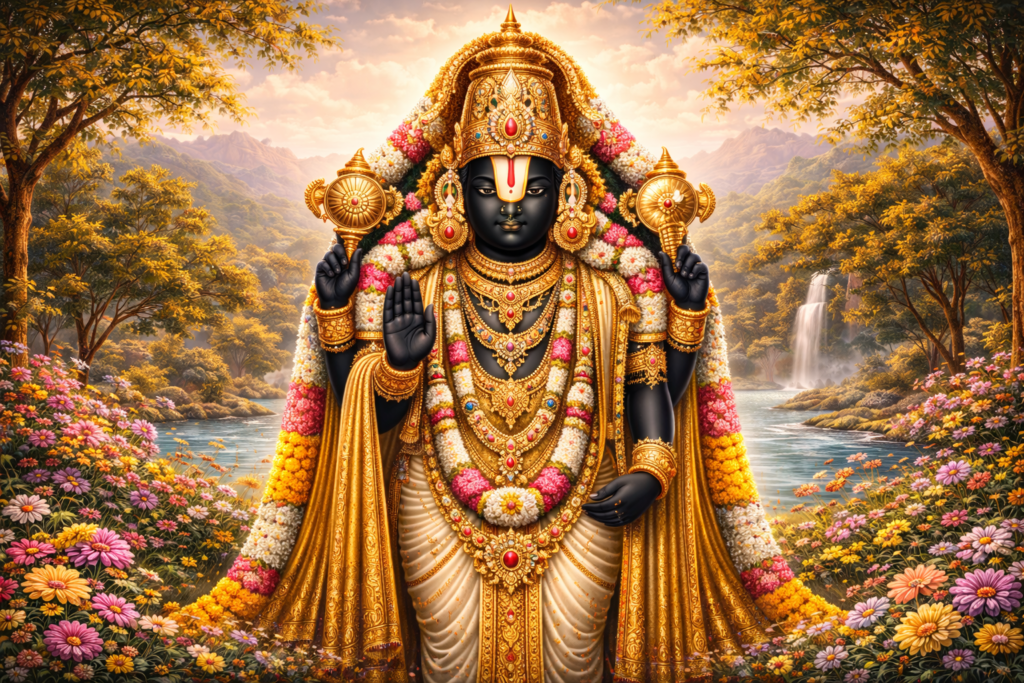
The Śrī Veṅkaṭeśa Stotram, also known as the Veṅkaṭeśa Mahātmya Stotra, is a sacred 16-verse hymn in praise of Lord Veṅkaṭeśa (a form of Viṣṇu) found in the Brahmāṇḍa Purāṇa, in the dialogue between Brahmā and Nārada. First eight verses of this stotra glorify the Lord’s various incarnations—including Rāma, Kṛṣṇa, Narasiṁha, and Varāha—and declares Him as the supreme deity.
It describes the Lord’s presence in Tirumala hill (Veṅkaṭādri) as the most sacred place in the universe and emphasizes the matchless greatness of Lord Veṅkaṭeśa. It describes this place as His divine choice to dwell on Earth and declare that there is no deity or place equal to Him or His abode. The phalaśruti verses highlight the immense spiritual and worldly benefits of reciting it regularly—such as freedom from sins, attainment of wealth, health, progeny, and liberation.
This stotra is often recited alongside the Śrī Veṅkaṭeśa Suprabhātam, especially during early morning worship, and holds deep significance for devotees seeking divine grace and protection. Chanting Sri Venkatesha Stotram with devotion is believed to bring peace, remove obstacles, attract prosperity, and invoke the divine grace of Lord Venkateswara.
श्री वेङ्कटेशस्तोत्रम् (Venkatesha Stotram)
वेङ्कटेशो वासुदेवः प्रद्युम्नोऽमितविक्रमः ।
सङ्कर्षणोऽनिरुद्धश्च शेषाद्रिपतिरेव च ॥ १॥
Veṅkaṭeśo Vāsudevaḥ Pradyumno’mitavikramaḥ |
Saṅkarṣaṇo’niruddhaś ca Śeṣādri-patir eva ca || 1 ||
जनार्दनः पद्मनाभो वेङ्कटाचलवासनः ।
सृष्टिकर्ता जगन्नाथो माधवो भक्तवत्सलः ॥ २॥
Janārdanaḥ Padmanābho Veṅkaṭācalavāsanaḥ |
Sṛṣṭikartā Jagannātho Mādhavo Bhaktavatsalaḥ || 2 ||
गोविन्दो गोपतिः कृष्णः केशवो गरुडध्वजः ।
वराहो वामनश्चैव नारायण अधोक्षजः ॥ ३॥
Govindo Gopatiḥ Kṛṣṇaḥ Keśavo Garuḍadhvajaḥ |
Varāho Vāmanaś caiva Nārāyaṇa Adhokṣajaḥ || 3 ||
श्रीधरः पुण्डरीकाक्षः सर्वदेवस्तुतो हरिः ।
श्रीनृसिंहो महासिंहः सूत्राकारः पुरातनः ॥ ४॥
Śrīdharaḥ Puṇḍarīkākṣaḥ Sarvadevastuto Hariḥ |
Śrīnṛsiṁho Mahāsiṁhaḥ Sūtrākāraḥ Purātanaḥ || 4 ||
रमानाथो महीभर्ता भूधरः पुरुषोत्तमः ।
चोळपुत्रप्रियः शान्तो ब्रह्मादीनां वरप्रदः ॥ ५॥
Ramānātho Mahībhartā Bhūdharaḥ Puruṣottamaḥ |
Colaputra-priyaḥ Śānto Brahmādīnāṁ Varapradaḥ || 5 ||
श्रीनिधिः सर्वभूतानां भयकृद्भयनाशनः ।
श्रीरामो रामभद्रश्च भवबन्धैकमोचकः ॥ ६॥
Śrīnidhiḥ Sarvabhūtānāṁ Bhayakṛd Bhayanāśanaḥ |
Śrīrāmo Rāmabhadraś ca Bhavabandhaikamocakaḥ || 6 ||
भूतावासो गिरावासः श्रीनिवासः श्रियःपतिः ।
अच्युतानन्तगोविन्दो विष्णुर्वेङ्कटनायकः ॥ ७॥
Bhūtāvāso Girāvāsaḥ Śrīnivāsaḥ Śriyaḥpatiḥ |
Acyutānanta-Govindo Viṣṇur Veṅkaṭanāyakaḥ || 7 ||
सर्वदेवैकशरणं सर्वदेवैकदैवतम् ।
समस्तदेवकवचं सर्वदेवशिखामणिः ॥ ८॥
Sarvadevaikaśaraṇaṁ Sarvadevaikadaivatam |
Samastadevakavacaṁ Sarvadevaśikhāmaṇiḥ || 8 ||
इतीदं कीर्तितं यस्य विष्णोरमिततेजसः ।
त्रिकाले यः पठेन्नित्यं पापं तस्य न विद्यते ॥ ९॥
Itīdaṁ kīrtitaṁ yasya Viṣṇor amitatejasaḥ |
Trikāle yaḥ paṭhen nityaṁ pāpaṁ tasya na vidyate || 9 ||
राजद्वारे पठेद्घोरे सङ्ग्रामे रिपुसङ्कटे ।
भूतसर्पपिशाचादिभयं नास्ति कदाचन ॥ १०॥
Rājadvāre paṭhe dhore saṅgrāme ripusaṅkaṭe |
Bhūta-sarpa-piśācādi-bhayaṁ nāsti kadācana || 10 ||
अपुत्रो लभते पुत्रान् निर्धनो धनवान् भवेत् ।
रोगार्तो मुच्यते रोगाद् बद्धो मुच्येत बन्धनात् ॥ ११॥
Aputro labhate putrān nirdhano dhanavān bhavet |
Rogārto mucyate rogād baddho mucyeta bandhanāt || 11 ||
यद्यदिष्टतमं लोके तत्तत्प्राप्नोत्यसंशयः ।
ऐश्वर्यं राजसम्मानं भक्तिमुक्तिफलप्रदम् ॥ १२॥
Yad yad iṣṭatamaṁ loke tat tat prāpnoty asaṁśayaḥ |
Aiśvaryaṁ rājasammānaṁ bhakti-mukti-phala-pradam || 12 ||
विष्णोर्लोकैकसोपानं सर्वदुःखैकनाशनम् ।
सर्वैश्वर्यप्रदं नॄणां सर्वमङ्गलकारकम् ॥ १३॥
Viṣṇor lokaika-sopānaṁ sarva-duḥkhaika-nāśanam |
Sarvaiśvarya-pradaṁ nṝṇāṁ sarva-maṅgala-kārakam || 13 ||
मायावी परमानन्दं त्यक्त्वा वैङ्कुण्ठमुत्तमम् ।
स्वामिपुष्करिणीतीरे रमया सह मोदते ॥ १४॥
Māyāvī paramānandaṁ tyaktvā Vaikuṇṭham uttamam |
Svāmipuṣkariṇī-tīre ramayā saha modate || 14 ||
कल्याणाद्भुतगात्राय कामितार्थप्रदायिने ।
श्रीमद्वेङ्कटनाथाय श्रीनिवासाय ते नमः ॥ १५॥
Kalyāṇādbhuta-gātrāya kāmitārtha-pradāyine |
Śrīmad-Veṅkaṭanāthāya Śrīnivāsāya te namaḥ || 15 ||
वेङ्कटाद्रिसमं स्थानं ब्रह्माण्डे नास्ति किञ्चन ।
वेङ्कटेशसमो देवो न भूतो न भविष्यति ॥ १६॥
Veṅkaṭādri-samaṁ sthānaṁ brahmāṇḍe nāsti kiñcana |
Veṅkaṭeśa-samo devo na bhūto na bhaviṣyati || 16 ||
॥ इति ब्रह्माण्डपुराणे ब्रह्मनारदसंवादे श्रीवेङ्कटेशस्तोत्रं सम्पूर्णम् ॥
॥ Iti Brahmāṇḍa Purāṇe Brahma-Nārada-saṁvāde Śrī
MEANING
वेङ्कटेशो वासुदेवः प्रद्युम्नोऽमितविक्रमः ।
सङ्कर्षणोऽनिरुद्धश्च शेषाद्रिपतिरेव च ॥ १॥
Veṅkaṭeśo Vāsudevaḥ Pradyumno’mitavikramaḥ |
Saṅkarṣaṇo’niruddhaś ca Śeṣādri-patir eva ca || 1 ||
Lord Veṅkaṭeśa (the Lord of Veṅkaṭa hill) is none other than Vāsudeva (the indweller of all beings),
He is Pradyumna (extremely mighty), endowed with amita-vikrama (unlimited valor), He is also Saṅkarṣaṇa (the source of strength and withdrawal; one who draws everyone towards himself), and Aniruddha (the unconquerable one). Indeed, He is the sovereign Lord of Śeṣādri (the sacred Śeṣa mountain).
जनार्दनः पद्मनाभो वेङ्कटाचलवासनः ।
सृष्टिकर्ता जगन्नाथो माधवो भक्तवत्सलः ॥ २॥
Janārdanaḥ Padmanābho Veṅkaṭācalavāsanaḥ |
Sṛṣṭikartā Jagannātho Mādhavo Bhaktavatsalaḥ || 2 ||
He is Janārdana (the one who punishes evil; one who grants liberation to people), Padmanābha (one with a lotus on his belly), and the eternal resident of Veṅkaṭāchala (sacred Tirumala hill) — thus, Veṅkaṭācalavāsanaḥ. He is the Sṛṣṭikartā (creator of the universe), Jagannātha (Lord of the cosmos), Mādhava (consort of Lakṣmī), and ever Bhaktavatsala (affectionate to His devotees).
गोविन्दो गोपतिः कृष्णः केशवो गरुडध्वजः ।
वराहो वामनश्चैव नारायण अधोक्षजः ॥ ३॥
Govindo Gopatiḥ Kṛṣṇaḥ Keśavo Garuḍadhvajaḥ |
Varāho Vāmanaś caiva Nārāyaṇa Adhokṣajaḥ || 3 ||
He is Govinda (protector of cows and the earth), Gopatiḥ (Lord of the cowherds), Kṛṣṇa (the all-attractive one), Keśava (slayer of the demon Keśi and Lord of beautiful hair), and Garuḍadhvajaḥ (the one whose banner bears Garuḍa). He is also Varāha (the divine boar incarnation), Vāmana (the dwarf incarnation), Nārāyaṇa (the refuge of all beings), and the ever-transcendent Lord, Adhokṣajaḥ (beyond material perception).
श्रीधरः पुण्डरीकाक्षः सर्वदेवस्तुतो हरिः ।
श्रीनृसिंहो महासिंहः सूत्राकारः पुरातनः ॥ ४॥
Śrīdharaḥ Puṇḍarīkākṣaḥ Sarvadevastuto Hariḥ |
Śrīnṛsiṁho Mahāsiṁhaḥ Sūtrākāraḥ Purātanaḥ || 4 ||
He is Śrīdhara (possessor of the Sri i.e. Ma Lakṣmī), Puṇḍarīkākṣaḥ (one with lotus-eyes),
Hariḥ (remover of sins), praised by Sarvadevāḥ (all the gods) — thus, Sarvadevastutaḥ. He is Śrīnṛsiṁha (the Lord as Narasimha, the Man-Lion incarnation), Mahāsiṁhaḥ (the Great Lion, fierce protector), Sūtrākāraḥ (the weaver of the cosmic thread), and Purātanaḥ (the most ancient, eternal one).
रमानाथो महीभर्ता भूधरः पुरुषोत्तमः ।
चोळपुत्रप्रियः शान्तो ब्रह्मादीनां वरप्रदः ॥ ५॥
Ramānātho Mahībhartā Bhūdharaḥ Puruṣottamaḥ |
Colaputra-priyaḥ Śānto Brahmādīnāṁ Varapradaḥ || 5 ||
He is Ramānātha (Lord of Goddess Lakṣmī), Mahībhartā (Sustainer of the Earth; one who held up the earth submerged in Pralaya waters), Bhūdharaḥ (supporter or bearer of the world), and Puruṣottamaḥ (the Supreme Person among all beings). He is Cholaputra-priyaḥ (beloved of the Chola kings or their descendants), Śānto (the peaceful one), and Varapradaḥ (grantor of boons) to the foremost among beings — the Brahmādīnām (starting from Brahmā and others).
श्रीनिधिः सर्वभूतानां भयकृद्भयनाशनः ।
श्रीरामो रामभद्रश्च भवबन्धैकमोचकः ॥ ६॥
Śrīnidhiḥ Sarvabhūtānāṁ Bhayakṛd Bhayanāśanaḥ |
Śrīrāmo Rāmabhadraś ca Bhavabandhaikamocakaḥ || 6 ||
He is the Śrīnidhiḥ (abode or treasure of Sri i.e. Ma Lakhmi). He is the indweller of Sarvabhūtānām (all beings), the one who creates fear in the wicked (Bhayakṛd) and removes fear from the good (Bhayanāśanaḥ). He is Śrīrāma (Lord Rāma), also known as Rāmabhadraḥ (the auspicious and kind Rāma), and the Bhavabandhaikamocakaḥ — the one and only liberator from the bondage of worldly existence.
भूतावासो गिरावासः श्रीनिवासः श्रियःपतिः ।
अच्युतानन्तगोविन्दो विष्णुर्वेङ्कटनायकः ॥ ७॥
Bhūtāvāso Girāvāsaḥ Śrīnivāsaḥ Śriyaḥpatiḥ |
Acyutānanta-Govindo Viṣṇur Veṅkaṭanāyakaḥ || 7 ||
He is Bhūtāvāsaḥ (the dwelling place of all beings), Girāvāsaḥ (the resident of the sacred hill), Śrīnivāsaḥ (abode of Ma Lakṣmī), and Śriyaḥpatiḥ (the consort of Ma Lakṣmī). He is Acyuta (one who can’t be destroyed), Ananta (the infinite), Govinda (protector of the world and cows), Viṣṇuḥ (the all-pervading one), and the sovereign Veṅkaṭanāyakaḥ (Lord of Veṅkaṭa Hill).
सर्वदेवैकशरणं सर्वदेवैकदैवतम् ।
समस्तदेवकवचं सर्वदेवशिखामणिः ॥ ८॥
Sarvadevaikaśaraṇaṁ Sarvadevaikadaivatam |
Samastadevakavacaṁ Sarvadevaśikhāmaṇiḥ || 8 ||
He is the Sarvadevaikaśaraṇam – the one and only refuge of all the gods. He is the Sarvadevaikadaivatam – the one supreme deity worshipped by all divine beings. He is the Samastadeva-kavacam – the protective armor of all the gods. He is the Sarvadeva-śikhāmaṇiḥ – the crest jewel among all deities.
इतीदं कीर्तितं यस्य विष्णोरमिततेजसः ।
त्रिकाले यः पठेन्नित्यं पापं तस्य न विद्यते ॥ ९॥
Itīdaṁ kīrtitaṁ yasya Viṣṇor amitatejasaḥ |
Trikāle yaḥ paṭhen nityaṁ pāpaṁ tasya na vidyate || 9 ||
Thus, has been sung this sacred glory (kīrtitam) of Viṣṇu, the Lord of amitatejasaḥ (infinite brilliance). Whoever paṭhen (recites) this daily (nityaṁ) trikāle (morning, noon, and evening), for such a person, pāpaṁ (sin) will na vidyate (no longer exist).
राजद्वारे पठेद्घोरे सङ्ग्रामे रिपुसङ्कटे ।
भूतसर्पपिशाचादिभयं नास्ति कदाचन ॥ १०॥
Rājadvāre paṭhe dhore saṅgrāme ripusaṅkaṭe |
Bhūta-sarpa-piśācādi-bhayaṁ nāsti kadācana || 10 ||
There will never exist (nāsti kadācana) a fear for the reciter, if this hymn is recited (paṭhe) at the royal gate (rājadvāra) or in terrifying times like fierce battles (ghora saṅgrāma) or during trouble from enemies (ripusaṅkaṭe), fear from spirits (bhūta), snakes (sarpa), ghosts (piśāca) and others, all will vanish.
अपुत्रो लभते पुत्रान् निर्धनो धनवान् भवेत् ।
रोगार्तो मुच्यते रोगाद् बद्धो मुच्येत बन्धनात् ॥ ११॥
Aputro labhate putrān nirdhano dhanavān bhavet |
Rogārto mucyate rogād baddho mucyeta bandhanāt || 11 ||
The aputraḥ (childless person) obtains putrān (sons/children), the nirdhanaḥ (poor person) becomes dhanavān (wealthy). The rogārtaḥ (one afflicted with illness) is freed from rogaḥ (disease),
and the baddhaḥ (one imprisoned or bound) is released from bandhanaḥ (bondage).
This verse emphasizes the miraculous benefits of reciting the stotra with devotion — it brings prosperity, health, and freedom.
यद्यदिष्टतमं लोके तत्तत्प्राप्नोत्यसंशयः ।
ऐश्वर्यं राजसम्मानं भक्तिमुक्तिफलप्रदम् ॥ १२॥
Yad yad iṣṭatamaṁ loke tat tat prāpnoty asaṁśayaḥ |
Aiśvaryaṁ rājasammānaṁ bhakti-mukti-phala-pradam || 12 ||
Whatever is iṣṭatamam (most desired) in the loka (world), that very thing is surely attained (tat tat prāpnoti) — there is asaṁśayaḥ (no doubt) about it. This stotra bestows aiśvaryaṁ (prosperity and opulence), rājasammānam (royal honor and recognition), and leads to the supreme fruits of bhakti (devotion) and mukti (liberation).
विष्णोर्लोकैकसोपानं सर्वदुःखैकनाशनम् ।
सर्वैश्वर्यप्रदं नॄणां सर्वमङ्गलकारकम् ॥ १३॥
Viṣṇor lokaika-sopānaṁ sarva-duḥkhaika-nāśanam |
Sarvaiśvarya-pradaṁ nṝṇāṁ sarva-maṅgala-kārakam || 13 ||
This stotra is the lokaika-sopānaṁ (the sole path) to reach the realm of Viṣṇu and the sarva-duḥkhaika-nāśanam — the one sure destroyer of all sorrows. It is the sarvaiśvarya-pradam (bestower of all forms of prosperity and lordliness) to nṝṇām (human beings), and the sarva-maṅgala-kārakam — the cause of all auspiciousness.
This verse powerfully summarizes the greatness of the stotra and its fruits for devotees in both material and spiritual life.
मायावी परमानन्दं त्यक्त्वा वैङ्कुण्ठमुत्तमम् ।
स्वामिपुष्करिणीतीरे रमया सह मोदते ॥ १४॥
Māyāvī paramānandaṁ tyaktvā Vaikuṇṭham uttamam |
Svāmipuṣkariṇī-tīre ramayā saha modate || 14 ||
One will leave (tyaktvā) the illusory happiness (Māyāvī paramānandaṁ) and reaches the highest abode —the supreme Vaikuṇṭha (Vaikuṇṭham uttamam), if he joyfully (modate) prays the Lord alongwith Ramayā (Goddess Lakṣmī) on the banks of the sacred lake Svāmipuṣkariṇī (located at Tirumala temple).
कल्याणाद्भुतगात्राय कामितार्थप्रदायिने ।
श्रीमद्वेङ्कटनाथाय श्रीनिवासाय ते नमः ॥ १५॥
Kalyāṇādbhuta-gātrāya kāmitārtha-pradāyine |
Śrīmad-Veṅkaṭanāthāya Śrīnivāsāya te namaḥ || 15 ||
Salutations to Śrīnivāsa, the glorious Veṅkaṭanātha (Lord of Veṅkaṭa Hill), whose form is kalyāṇa-ādbhuta-gātra — wondrous and auspicious in every limb, and who is the bestower of kāmitārtha — all cherished desires. To that divine Lord— I offer my prostrations (te namaḥ).
वेङ्कटाद्रिसमं स्थानं ब्रह्माण्डे नास्ति किञ्चन ।
वेङ्कटेशसमो देवो न भूतो न भविष्यति ॥ १६॥
Veṅkaṭādri-samaṁ sthānaṁ brahmāṇḍe nāsti kiñcana |
Veṅkaṭeśa-samo devo na bhūto na bhaviṣyati || 16 ||
There exists absolutely no place (na asti kiñcana) in the cosmic universe (brahmāṇḍa) equal to the sacred Veṅkaṭa Hill (Veṅkaṭādri). Nor has there ever been, nor shall there ever be, a divine being (deva) equal to Lord Veṅkaṭeśa — neither in the past, nor in the future (na bhūtaḥ, na bhaviṣyati).
This verse emphasizes the supremacy and uniqueness of Lord Veṅkaṭeśa and His sacred abode, Veṅkaṭa Hill (Tirumala).
॥ इति ब्रह्माण्डपुराणे ब्रह्मनारदसंवादे श्रीवेङ्कटेशस्तोत्रं सम्पूर्णम् ॥
॥ Iti Brahmāṇḍa Purāṇe Brahma-Nārada-saṁvāde Śrī Veṅkaṭeśa Stotraṁ Sampūrṇam ॥
Thus ends the Śrī Veṅkaṭeśa Stotra, which appears in the dialogue between Brahmā and Nārada in the revered Brahmāṇḍa Purāṇa.